

Florentine Leather: A Traveler’s Guide to Real Made in Italy (and How to Spot the Fakes)
A city that has always worked with its hands
Walk across the Ponte Vecchio at sunrise and the city feels like a workshop that happens to be a museum. Florence was a city of craftsmen long before it was a city of tourists: medieval guilds, Renaissance workshops, generations of families passing down the same gestures. Leather has always been part of that story.
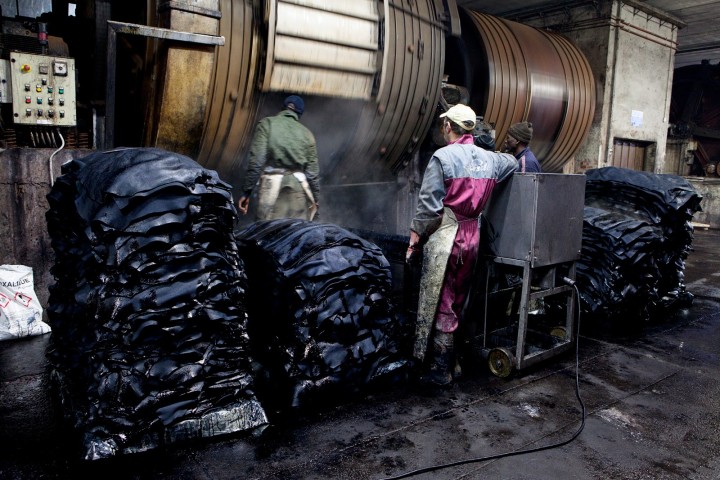
Cross the Arno into the Oltrarno, or wander around Santa Croce, and you’ll still find small workshops where someone is cutting, stitching and finishing by hand. Not far from the city, in the Tuscan tanning district around Santa Croce sull’Arno, the region has tanned leather for generations, and Tuscany remains one of the places where Italian leather is made.
What “Made in Italy” should really mean
For a traveler, “Made in Italy” suggests three things: good leather, skilled hands and a story you can trace. In practice, the label alone tells you very little. A piece can be stamped “Italy” and still be made with imported leather, cut and sewn elsewhere, and finished with a label at the end.
Real craftsmanship starts with the material (where the leather was tanned and which type it is), continues with the work (cut, stitched and finished by people who can show you how) and ends with a maker who is willing to put their name on it.
The unpleasant truth: not everything sold as Italian is Italian
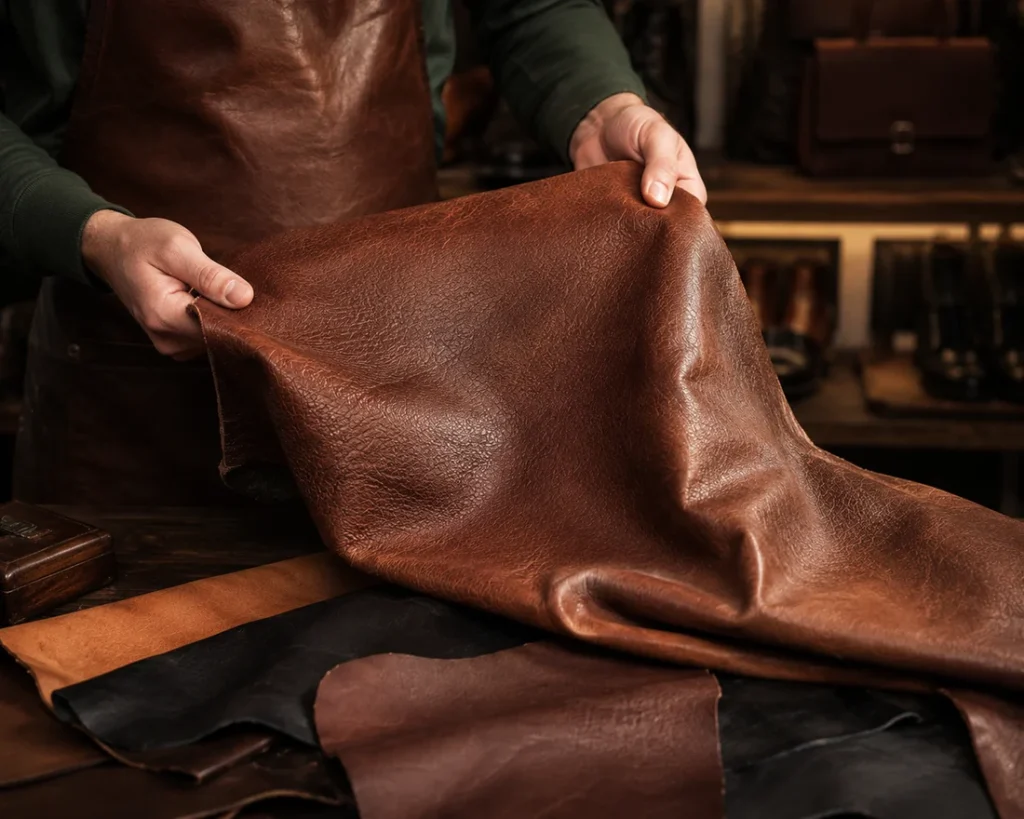
Let’s say it plainly. Florence welcomes millions of visitors who can’t be expected to tell a full-grain hide from a treated, embossed one. Unfortunately, some sellers take advantage of this, offering items made with non-Italian leather, often not made in Italy at all, and presenting them as authentic Made in Italy.
You don’t need to be an expert to protect yourself. You just need to know what to look for.Six warning signs
1. The price is too good to be true. This is the first signal and the most reliable. A product made entirely in Italy has a real cost: quality leather is expensive, and so is the work of a skilled artisan, who follows demanding standards. If a “genuine Italian leather” jacket costs less than the leather alone should, the numbers don’t add up.
2. Vague answers. A real maker can tell you what type of leather it is (full grain, lambskin, vegetable-tanned…), where it was tanned and where the piece was made. If the answer is just “it’s Italian leather”, ask more.
3. “Genuine leather” is not a mark of quality. It only says the material is leather, not its grade or its origin.
4. A sticker is not proof. “Made in Italy” on a label is not a certification. Ask who certifies it, and who the maker is.
5. Identical stock and no maker. Many items that look the same, no workshop in sight and no name behind the product call for extra questions.
None of this means every stall or shop is dishonest: plenty are not. It simply means you should ask, compare and trust your questions more than a label.
Where to buy: places and names worth knowing
- Benheart: a Florentine brand founded designing and producing high-end leather jackets, shoes, bags, belts and wallets, entirely handcrafted in Florence and certified 100% Made in Italy by the Istituto per la Tutela dei Produttori Italiani. Benheart offers personalization services, including a leather label inside its jackets that can carry your full name or initials, and belts that are sewn to measure in its stores.
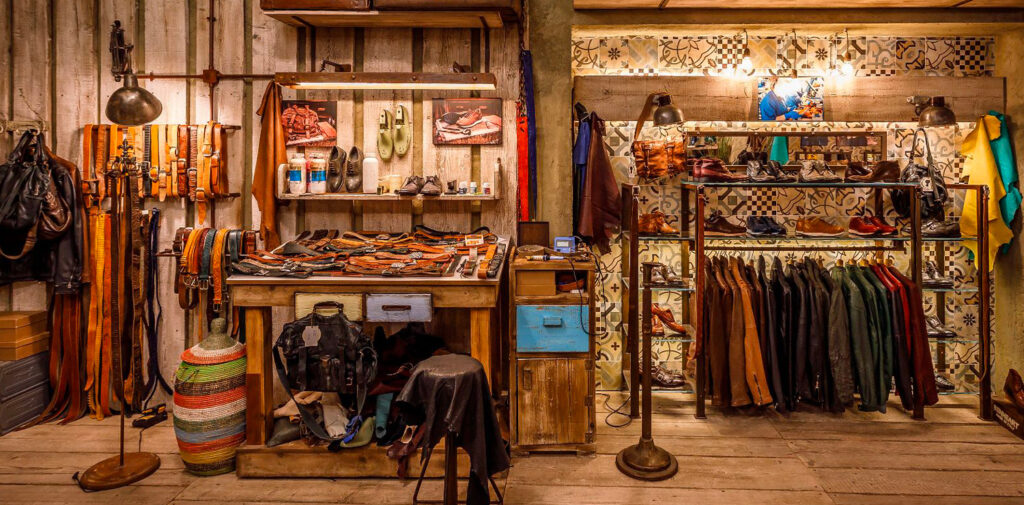
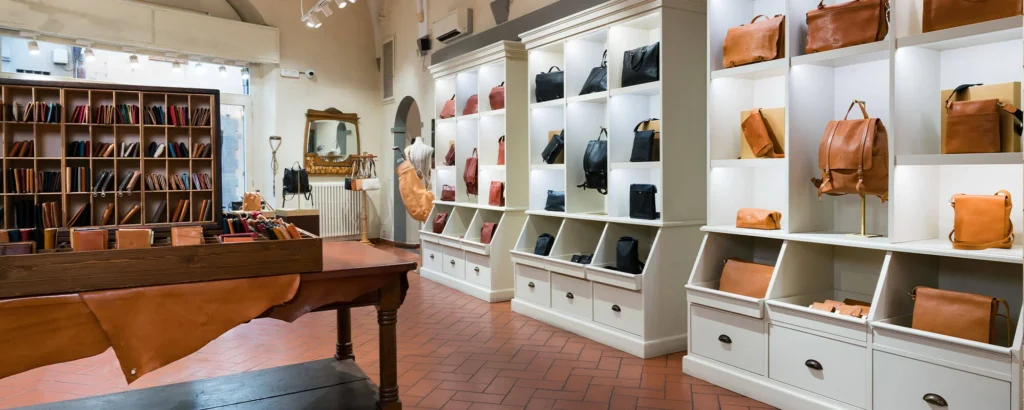
- Il Bisonte: a leather goods brand founded in Florence by Wanny Di Filippo, in a small workshop in the historic centre. It is known above all for its vegetable-tanned cowhide, a natural leather that softens and develops a rich patina with use, and for a relaxed, timeless style.
- Scuola del Cuoio (Santa Croce): founded in 1950 inside the monastery of Santa Croce by Franciscan friars and the Gori and Casini families, to teach a trade to war orphans, and still run by the Gori family today. You can walk in for free, watch artisans work the leather by hand and buy directly from the people who make it.
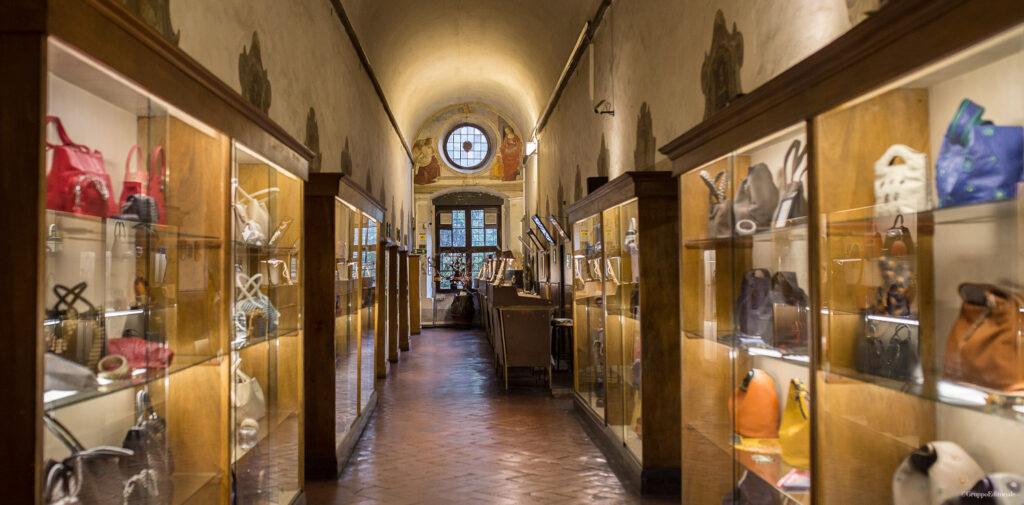
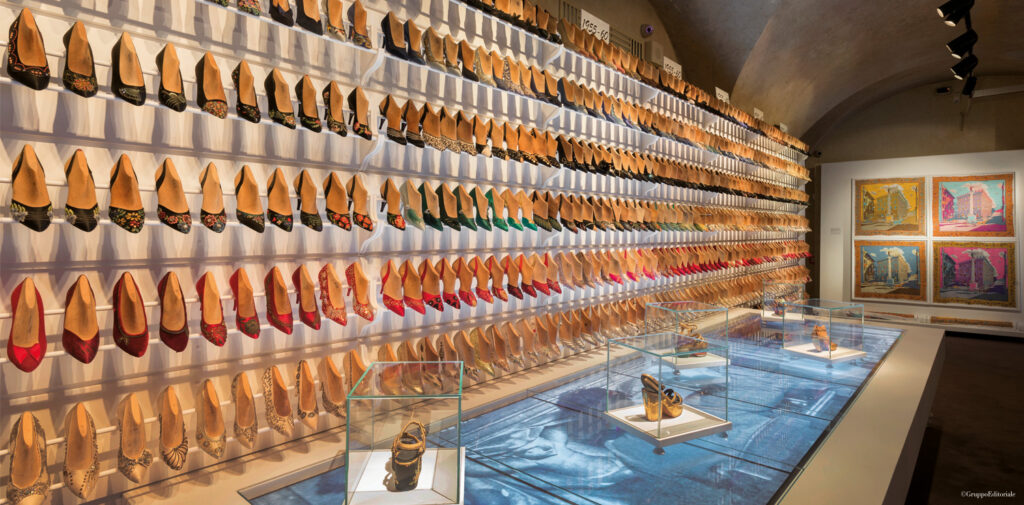
- Salvatore Ferragamo: founded in 1927 by Salvatore Ferragamo, who had made his name in Hollywood in the 1920s, earning the title “shoemaker to the stars” with creations worn by Judy Garland, Audrey Hepburn and Marilyn Monroe. Since 1938 the company has been based in the medieval Palazzo Spini Feroni, on the Arno, and its museum below the palazzo (opened in 1995) is one of the best places in the city to understand how shoemaking became an art. Inside you’ll find thousands of historic shoe designs, sketches, patents and wooden lasts, plus rotating exhibitions. Quality and price:Ferragamo is a luxury house. Its shoes, bags and accessories are made in Italy with high-quality materials, and prices reflect both the craftsmanship and the weight of a global brand: shoes typically start at several hundred to around a thousand dollars or more, and bags cost more.
A souvenir with a story
The best thing you can take home from Florence isn’t just an object, it’s the story behind it: who made it, where the leather comes from, and why it costs what it costs. Ask your questions, take your time, and choose something that will age well with you, long after the trip is over.
